

In partnership with

Happy Sunday, beautiful people 😎
Yesterday marked five years since we arrived in Portugal! 🥳
And jeez, have we made our fair share of mistakes along the way. Some glaringly obvious (like not reading the fine print when we financed our first car in Portugal, which resulted in the bank seizing all our money 😬), and others we only recognised as mistakes much further down the road.
The frustrating thing is that many of the mistakes most expats make are entirely avoidable, especially when you have the right people to guide you. People who've seen the same mistakes made by countless others before you and know what to look out for.
And that's exactly what today's article is about.
The legal team at Fresh Portugal shares the most common and costly mistakes they've seen expats make during their first two years in Portugal, along with some valuable advice on how to avoid them.
Hopefully, their insights will save you a few euros (and tears!) down the road.
Let’s dive in, shall we?
📷 Pic of the week

Miradouro do Ujo is a striking iron balcony that seems to float above the Tua Valley in Alijó, offering an almost aerial view of the river winding far below. From this dramatic platform, the landscape unfolds in layers of terraced slopes, vines, olive and orange trees, and the calm blue of the Tua reservoir—especially magical at sunset, when the light turns the whole valley golden

⏸ Quote Of The Week
"Saudade is this: the presence of absence."
⚖ Legal Matters

Gif by thesimpsons on Giphy
Moving to Portugal is exciting, but between settling into a new home, navigating unfamiliar systems and figuring out how everything works, it's easy to overlook some important financial and legal details. Unfortunately, some of these oversights can turn into costly mistakes further down the road.
So, what are the most common pitfalls, and how can you avoid them? This week, the team at Fresh Portugal shares their insights into the mistakes they most frequently see expats make during their first two years in Portugal, and what you can do to avoid falling into the same traps.
A big thank you to the Fresh Legal team for sharing their expertise and helping us navigate the less glamorous (but very important!) side of building a life in Portugal.
⚖
The Most Costly Financial Mistakes Expats Make in Their First 2 Years in Portugal
Moving to Portugal involves a lot of financial decisions at once.
Taxes, property, bank accounts, investments, businesses, and residency all need attention, often before you fully understand how the Portuguese system works.
This is why some of the most expensive mistakes happen during the first two years.
They are rarely caused by reckless decisions. More often, they come from assuming that something that worked in your previous country will work the same way in Portugal.
Here are some of the most important ones to avoid.
1. Waiting Until After the Move to Think About Taxes
One of the biggest mistakes is looking at Portuguese tax only after becoming resident.
Legal residency and tax residency are different. Your residence permit determines your right to live in Portugal, while tax residency determines how Portugal treats your income.
Under the general rules, spending more than 183 days in Portugal during the relevant 12-month period can result in Portuguese tax residency. However, tax residency can also arise in other circumstances, including where you have a home in Portugal under conditions that indicate an intention to maintain and occupy it as your habitual residence.
The timing matters. Selling property or investments, receiving dividends, restructuring a company, or making other significant financial decisions before or after becoming Portuguese tax resident can produce very different results.
Ideally, these questions should be reviewed before the move rather than afterwards.
2. Assuming Foreign Income Stays Outside Portugal
Another common mistake is assuming that income earned abroad has nothing to do with Portugal.
Portuguese tax residents are generally subject to tax on worldwide income, although the final treatment depends on the type of income, applicable Portuguese rules, special regimes, and double taxation treaties.
This can include foreign salaries, rental income, dividends, interest, pensions, capital gains, and business income. Paying tax abroad does not mean that the income does not need to be reported in Portugal.
The same applies when selling foreign assets. A property, investment, or business may be located abroad, but if you are Portuguese tax resident when you sell it, Portuguese tax consequences may still need to be considered.
3. Keeping the Same Business Structure Without Reviewing It
Many entrepreneurs move to Portugal with an existing foreign company. It may be a U.S. LLC, UK limited company, or another structure that has worked perfectly well for years.
The mistake is assuming nothing changes when the owner moves.
Portugal may treat foreign entities and their income differently from the country where the company was created. Where the company is effectively managed or controlled is often extremely relevant once the person running it is living in Portugal.
This does not mean every foreign company needs to be restructured. It means the structure should be reviewed in the context of Portuguese tax residency rather than simply carried over unchanged.
4. Buying Property Without Looking at the Full Cost
Buying a home is often one of the largest financial decisions expats make during their first years in Portugal. But the purchase price is only part of the calculation.
Taxes, registration, legal costs, financing, insurance, condominium fees, maintenance, and ongoing property taxes should all be considered.
How the property is owned can also have longer-term tax, succession and estate-planning consequences. For international families, Portuguese property may eventually become part of an estate involving heirs, wills, and assets in several countries.
The question should therefore be bigger than whether you can afford the purchase today. It should also consider how the property fits into your wider financial plans.
5. Missing Tax Benefits or Important Deadlines
Portugal's tax system has changed significantly in recent years. Information from friends who moved several years ago may no longer apply.
The old NHR regime is no longer generally available to new arrivals, while IFICI, sometimes called NHR 2.0, has more specific eligibility requirements.
Qualifying should never be assumed. Professional activity, qualifications, employer or company, registration requirements, and deadlines all matter depending on the qualification pathway.
The same applies to basic administration. Your tax residency should be correctly registered, and the records before banks, investment platforms, and other financial institutions may need to be updated when your tax residency changes.
Small administrative mistakes can become much more difficult to correct later.
6. Forgetting About the Country You Left
Moving to Portugal does not necessarily end your financial obligations in your previous country.
You may still own property there, receive rental income, hold investments, operate a company, or have tax filing obligations.
For U.S. citizens, for example, moving abroad does not end all tax filing requirements.
This means that financial decisions should not be considered from the Portuguese perspective alone.
Understanding how the two systems interact can be particularly important before selling property, changing investments, receiving significant income, or restructuring a business.
7. Leaving Estate Planning Until Later
Estate planning is easy to postpone when you have just moved.
But international families can quickly have property, bank accounts, investments, insurance, and family members spread across different countries.
Existing wills should be reviewed to understand whether they still work as intended after moving to Portugal.
It is also worth knowing who can access important accounts, where key documents are stored, whether appropriate powers of attorney exist, and how Portuguese assets would be handled if something happened.
These questions become particularly important when several countries are involved.
The First Year Matters
Most of these mistakes start with reasonable assumptions made before or upon relocation.
"I already paid tax abroad."
"My company is registered in another country."
"I'll deal with Portuguese taxes later."
"My existing will already covers everything."
But moving countries changes the context around your finances and your life.
You do not necessarily need to change everything.
But understanding what changed when you moved can prevent small decisions from becoming expensive problems later.
⚖
With thanks to our collaborators at FRESH Portugal, for their valuable insights and contributions to this article.
The legal team at Fresh Portugal is composed of experienced professionals with expertise in tax, immigration, real estate, estate planning, and corporate law. They advise individuals and businesses on relocation, investment, compliance, and tax planning. With extensive experience working with international clients, the team delivers clear, practical, and forward-thinking solutions to help expats thrive in Portugal.
Email: [email protected]
🔎 On Our Radar
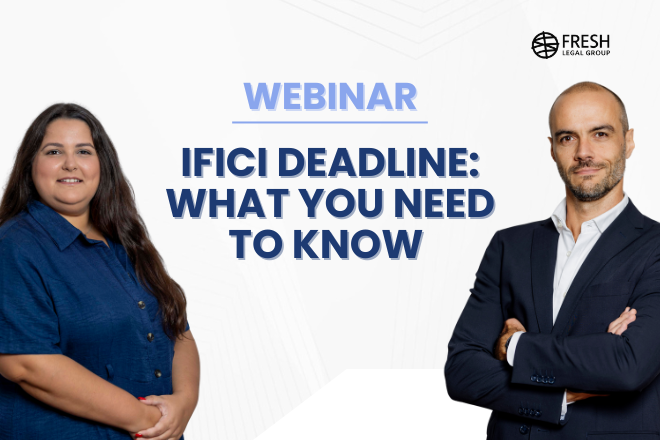
If you became a Portuguese tax resident in 2026 and think you may qualify for IFICI (often referred to as NHR 2.0), this upcoming FRESH webinar is worth putting on your radar. Eligibility isn’t automatic and can depend on everything from your previous tax residence and professional activity to the organisation you work with and the particular IFICI route you apply under. Luís Costa and Raquel Simões will explain who may qualify, what’s working in practice, common mistakes and what needs to be in place before applying—particularly important as missing the deadline could mean losing years of the potential tax benefits. Tuesday, 13 October at 5:00 PM Portugal time.
🗣 Lost in Lingo - by Mia Esmeriz
Learn how to talk about household chores in European Portuguese using natural vocabulary and expressions that Portuguese people use in everyday life.
Do you use “limpar” whenever you talk about cleaning in Portuguese? Although “limpar” is correct in many situations, European Portuguese has lots of more specific - and more natural - verbs for different household tasks.
In this lesson, you’ll learn practical vocabulary for cleaning, tidying, cooking, doing the laundry and making the bed.
You’ll learn expressions such as:
varrer o chão
passar a esfregona
tirar o pó
lavar a loiça
levar o lixo lá abaixo
estender e dobrar a roupa
fazer a cama
I’ll also show you how to use these expressions in natural, everyday sentences.
📄 DOWNLOAD THE FREE PDF
I’ve prepared a free PDF containing all the vocabulary from this video, English translations and example sentences. You can save it, print it and review the expressions whenever you need them.
🗣 Want to learn more phrases like this? Check out Mia’s free Portuguese course “Kickstart Your Portuguese - The Basics”.
💡 Mia from Mia Esmeriz Academy is a Portuguese teacher from Porto with more than 15 years of experience teaching foreigners. She helps expats become fluent in Portuguese in a clear and practical way. Alongside her courses, she also shares free content on Instagram, Facebook, and TikTok.
…And That’s All Folks

Thanks for reading! 💌
Hustle on!
Angelique
PS — got an expat friend who's one bureaucratic form away from booking a flight home? Forward this newsletter their way. We're all just trying to figure it out together.
Stuck on a Portuguese document?
I’ve put together a free guide to the documents you’re likely to come across as a foreign resident in Portugal. It explains what each one is, where to get it, whether it expires, and links you to the official source. No login, no sales pitch — just useful information when you need it.
☕ If this newsletter helps you navigate expat life, consider fueling my next research session with a coffee! Click HERE 💟 You ROCK! Thank you!! 💌
Did you enjoy this week’s newsletter?